Walking into your first marriage counseling session can feel intimidating. You might wonder what questions the therapist will ask, whether you’ll need to share everything at once, or if your partner will actually open up. These concerns are completely normal, and understanding what to expect in marriage counseling can help you approach those early sessions with more confidence and less anxiety.
At Secure Connection Counseling, we specialize in helping couples rebuild trust and connection through evidence-based approaches like Emotionally Focused Therapy. We’ve seen how uncertainty about the process can hold people back from fully engaging, which is why knowing what’s ahead makes such a difference in the results you’ll experience.
This article covers everything from your first intake session to the communication exercises you’ll practice together. You’ll learn what questions therapists typically ask, how sessions balance skill-building with addressing your specific relationship issues, and practical ways to prepare mentally and emotionally for the work ahead.
Why couples choose marriage counseling

Couples walk through our doors for many different reasons, and none of them are signs of weakness or failure. Some arrive after years of accumulated frustration, while others come as soon as they notice communication slipping. Understanding what to expect in marriage counseling starts with recognizing that seeking help is actually one of the strongest decisions you can make for your relationship.
When communication has broken down
You might find yourselves having the same argument repeatedly without resolution, or perhaps conversations escalate into shouting matches that leave both partners feeling unheard. These patterns often develop gradually, and you may not even realize how disconnected you’ve become until everyday discussions feel impossible. Couples in this situation typically seek counseling because they recognize that something fundamental has shifted in how they relate to each other.
The breakdown isn’t always dramatic. Sometimes it’s the quiet distance that grows when partners stop sharing their thoughts, fears, or daily experiences. You might be living parallel lives in the same home, functioning as roommates rather than romantic partners.
When you stop feeling safe sharing your inner world, the relationship foundation begins to crack.
When trust needs rebuilding
Infidelity, broken promises, or repeated disappointments bring many couples to therapy. Rebuilding trust requires more than time; it demands structured guidance on how to process pain, establish transparency, and create new patterns of reliability. You need professional support to navigate these conversations without causing additional damage.
When you want prevention, not crisis management
Smart couples don’t wait for disaster. You might be engaged, recently married, or simply recognizing early warning signs you want to address before they become bigger problems. Premarital counseling or relationship tune-ups help you build skills and establish healthy patterns from the start, rather than trying to fix deeply ingrained dysfunction later.
Some couples also seek counseling during major life transitions like having children, career changes, or relocating. These moments put new stress on relationships, and proactive counseling helps you adapt together rather than growing apart under pressure.
What happens in your first session
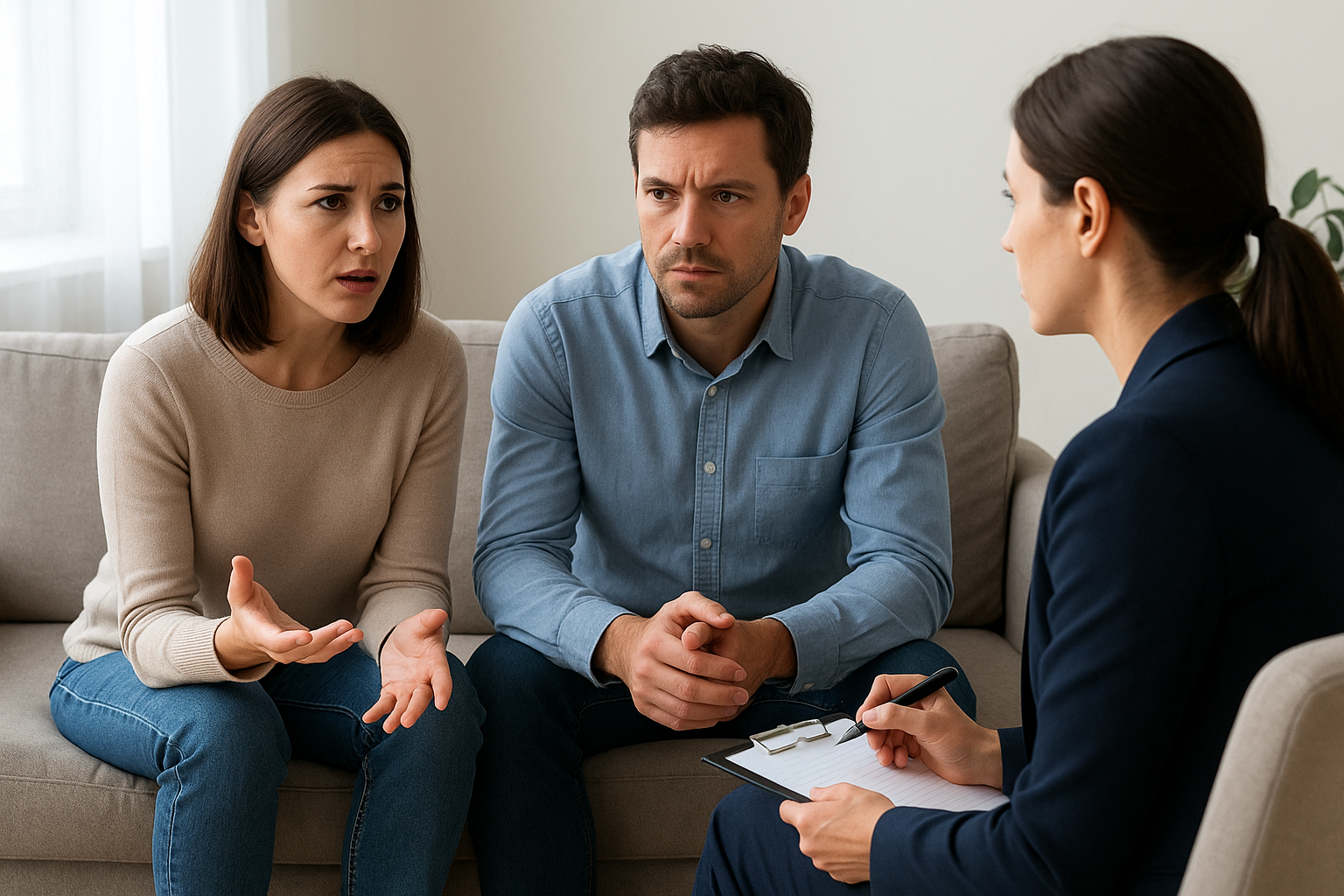
Your first session focuses on gathering information and establishing a foundation for the work ahead. The therapist needs to understand your relationship history, current challenges, and what brought you to counseling now. Knowing what to expect in marriage counseling helps you prepare for this initial conversation, which typically lasts 60 minutes and sets the tone for everything that follows.
The assessment process
Your first session and second sessions focus on understanding your relationship through an attachment lens. Rather than immediately teaching skills, your therapist begins by developing goals, asking about your personal and couple history, and mapping the emotional patterns between you.
You’ll discuss how you met, how connection developed, and when shifts began to occur. The therapist listens not just for events, but for emotional themes — moments of closeness, moments of hurt, and the patterns that now repeat during conflict.
In EFT-based work, the goal of the first two sessions is to identify your negative cycle — the predictable interaction pattern that keeps you stuck. One partner may pursue while the other withdraws. One may escalate while the other shuts down. Understanding this cycle becomes the foundation for treatment.
This assessment isn’t about assigning blame. It’s about identifying the pattern that traps both of you.
What your next sessions may look like

After the intake and assessment phase, sessions shift toward restructuring your emotional bond.
In EFT-based couples therapy, new and corrective emotional experiences are created in the service of something deeper: emotional safety and secure attachment.
Your therapist helps you slow down real interactions in session so you can notice what happens beneath the surface. Instead of focusing only on what was said, you’ll explore what you were feeling, what you needed in that moment, and what you were afraid might happen.
You may hear your therapist ask questions like:
“What was happening inside you right then?”
“What did you most need from your partner in that moment?”
“What were you afraid would happen?”
These questions help access the vulnerable emotions underneath anger, criticism, or withdrawal.
Over time, sessions focus on:
Identifying your negative interaction cycle
Accessing and expressing primary emotions
Creating new bonding moments in session
Restructuring how you respond to each other during distress
Communication tools may be introduced, but they are not the main focus. Skills support the deeper work of creating emotional safety.
In EFT, change happens when partners experience each other differently — not just when they talk differently.
Communication Skills as Supportive Tools
You may practice structured conversations in session, but these exercises are designed to support emotional attunement — not to replace it.
Your therapist may guide you to:
Speak from vulnerability rather than criticism
Reflect what you heard before responding
Slow down escalated exchanges
Stay engaged rather than shutting down
These tools help regulate conversations so deeper emotional work can occur.
In this model, communication skills are helpful, but transformation happens when partners feel emotionally safe with each other.
These aren’t abstract concepts,and we don’t do “role plays.”. You’ll work through real conflicts from your life, applying new communication tools in the moment with your therapist’s guidance. The goal is making these skills automatic so you can use them at home during heated discussions.
The best communication tools only work when you practice them repeatedly until they become natural habits.
Processing emotions and patterns
Sessions also focus on uncovering underlying feelings beneath surface-level arguments. Your therapist helps you identify emotional triggers, attachment wounds, and destructive cycles you’ve fallen into without realizing it. This deeper work takes time and requires vulnerability from both partners.
You might explore how past experiences or family dynamics shape your current relationship patterns. Recognizing these connections helps you respond differently when old triggers arise, breaking cycles that have kept you stuck.
Common questions a marriage counselor may ask
Your therapist will ask targeted questions designed to understand your relationship dynamics and identify areas needing attention. These questions aren’t meant to make you uncomfortable, though some may feel challenging to answer honestly. Knowing what to expect in marriage counseling includes preparing for these conversations, which help your therapist tailor their approach to your specific situation and goals.
Questions about your relationship history
The therapist will ask how you met and fell in love, what initially attracted you to each other, and when you first noticed problems emerging. You’ll discuss major milestones like moving in together, marriage, or having children, and how these transitions affected your bond. They might ask what your relationship looked like during its best periods and what’s changed since then.
These historical questions help identify patterns and turning points that shaped your current dynamic. Understanding your relationship’s trajectory gives the therapist insight into what worked before and what needs rebuilding now.
Questions about your past aren’t about blame; they reveal the foundation you’re working to strengthen.
Questions that explore current conflicts
Your counselor will ask you to describe recent arguments and what triggers them most frequently. They’ll want to know how you typically try to resolve disagreements and whether certain issues keep resurfacing without resolution. Questions like “What happens when you try to talk about this?” or “How does your partner respond when you’re upset?” help reveal communication breakdowns.
Therapists also ask about emotional safety, intimacy, and whether you feel heard by your partner. These questions expose vulnerable areas where trust has eroded or connection has weakened.
How to prepare and what to avoid saying
Preparing for marriage counseling means coming with openness rather than a fixed agenda about what your partner needs to change. Understanding what to expect in marriage counseling includes recognizing that the most productive sessions happen when both partners arrive ready to examine their own contributions to relationship problems, not just point out the other person’s flaws.
Mental preparation matters
Before your session, reflect on specific examples of conflicts rather than vague complaints like “we never communicate.” Think about recent situations where things went wrong and what you felt in those moments. Write down your thoughts and concerns if that helps you organize them, but avoid rehearsing speeches designed to prove you’re right.
You’ll benefit most when you approach therapy as collaborative problem-solving rather than a courtroom where you need to win arguments. Set aside the need to be vindicated and focus instead on understanding patterns that aren’t working for either of you.
The couples who make the fastest progress come willing to change themselves, not just their partner.
What not to say during sessions
Avoid absolute statements like “you always” or “you never” because they put your partner on the defensive and shut down productive conversation. Don’t bring up everything your partner has ever done wrong or weaponize past mistakes that you previously said you forgave. These tactics derail the session and damage trust.
Skip the character attacks and labels like “selfish” or “crazy.” Instead, describe specific behaviors and how they affect you. Your therapist needs honesty, but delivery matters as much as content when you’re trying to rebuild connection.
Where to go from here
Understanding what to expect in marriage counseling allows you to approach the process with clarity rather than fear. In an EFT-based model, the goal isn’t simply better conflict management — it’s rebuilding secure emotional connection.
Through structured assessment, exploration of attachment patterns, and guided emotional conversations, couples begin to see each other differently. When the negative cycle softens, vulnerability increases. When vulnerability increases, connection strengthens.
If you’re ready to move beyond surface-level communication strategies and address the deeper emotional patterns shaping your relationship, Secure Connection Counseling provides attachment-focused couples therapy designed to create lasting change.