The first year of marriage comes with real adjustments, merging routines, navigating expectations, and learning how to communicate when emotions run high. Many couples assume marriage counseling for newlyweds is only for relationships in crisis, but seeking support early can actually prevent small misunderstandings from becoming entrenched patterns. At Secure Connection Counseling, we work with couples who want to build a strong foundation rather than wait until problems feel overwhelming.
Starting therapy in the early stages of marriage gives you tools to handle conflict, deepen intimacy, and understand each other on a level that strengthens your bond for years to come. Whether you’re dealing with specific challenges or simply want to invest in your relationship, professional guidance can make a measurable difference. Here are eight ways that counseling helps newlyweds create the secure, lasting connection they envisioned on their wedding day.
1. Start strong with EFT-based newlywed counseling
Emotionally Focused Therapy (EFT) provides a proven structure for couples who want to build a secure attachment from the start of their marriage. Rather than focusing on surface-level disagreements, this approach helps you understand the emotional patterns that drive conflict and disconnection. At Secure Connection Counseling, we specialize in EFT because it targets the root of relationship struggles: how safe and valued you feel with each other.
What EFT focuses on in the first year of marriage
EFT identifies the cycle of disconnection that can begin early in your relationship, when one partner pursues closeness and the other withdraws. Your therapist helps you recognize these patterns before they become entrenched, teaching you to reach for each other in moments of stress instead of pulling away. This process builds emotional safety, which is the foundation for every other aspect of your marriage. Oftentimes this involves a review of how these patterns and cycles played out in your family of origin, or in other relationships you’ve had.
What to expect in your first few sessions
You’ll start by sharing your story as a couple and describing what brought you to therapy. Your counselor will help you identify the specific triggers and fears that fuel your conflicts, then guide you toward expressing vulnerability without blame. Sessions typically last 50 to 60 minutes and follow a structured yet flexible format that adapts to your unique dynamic.
Marriage counseling for newlyweds works best when both partners feel heard and understood from the very first session.
How telehealth can work for busy newlyweds
Telehealth removes barriers like commute time and scheduling conflicts, making it easier to prioritize your relationship. You can attend sessions from home or anywhere with a secure internet connection, which helps you stay consistent even during travel or unpredictable work schedules. This flexibility means you’re more likely to show up regularly, which directly impacts the progress you make together.
How to choose the right counselor for you both
Look for a therapist with specialized training in EFT and experience working with couples in the first years of marriage. Check their credentials, read reviews from other clients, and schedule a brief consultation call to see if their approach feels like the right fit. Trust your instincts about whether you both feel comfortable opening up in their presence.
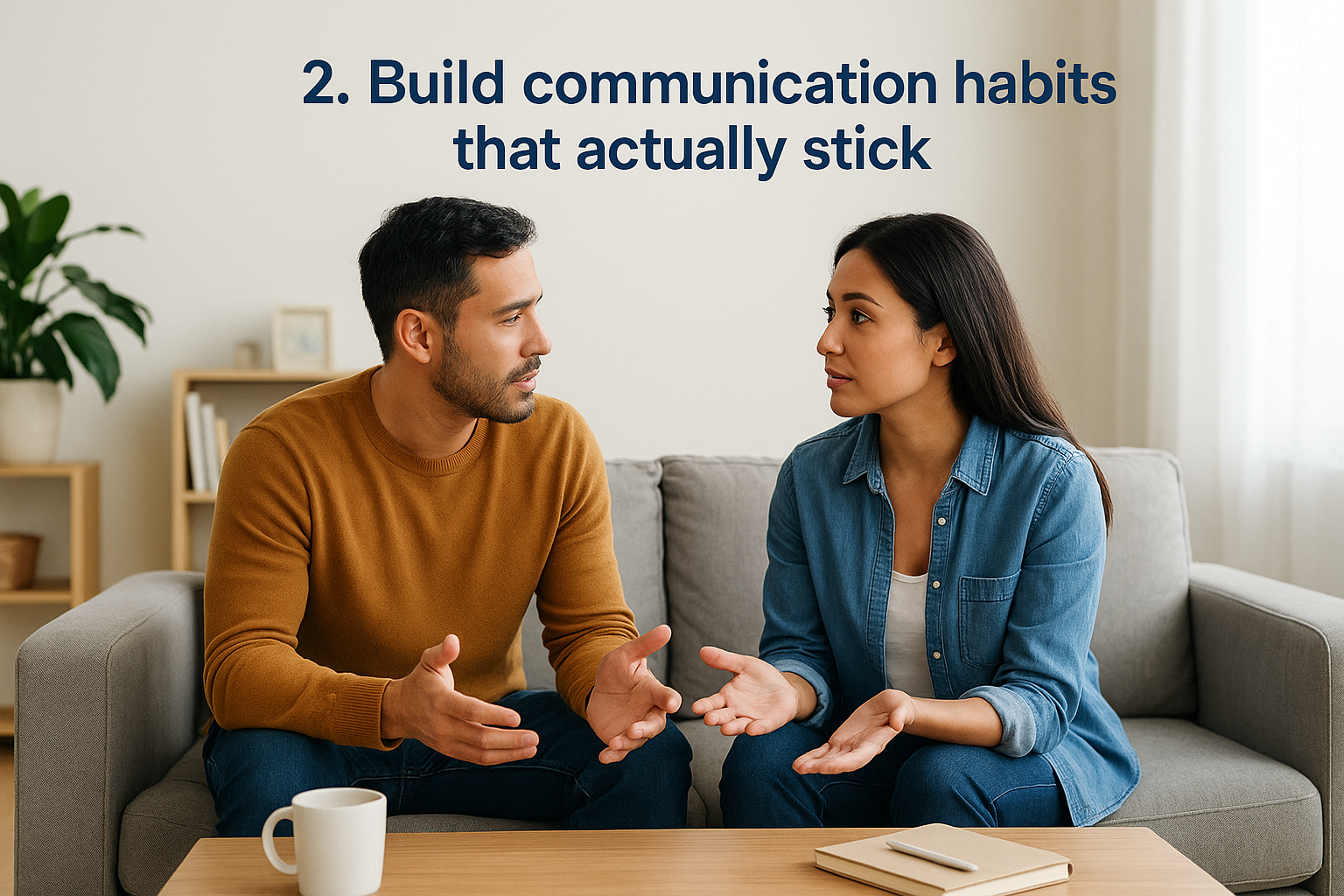
2. Build communication habits that actually stick

Strong communication patterns form the backbone of a healthy marriage, but they rarely develop on their own. In marriage counseling for newlyweds, you learn specific skills that help you express yourself clearly, hear your partner without judgment, and navigate disagreements before they spiral. These habits become automatic when you practice them consistently, turning difficult conversations into opportunities for deeper connection.
Identify your communication patterns and triggers
You’ll learn to recognize when you shut down, escalate, or deflect during tense moments. Your therapist helps you spot the specific words, tones, or situations that trigger defensiveness in each of you, so you can address the pattern instead of attacking each other. This awareness stops you from repeating the same argument every time stress builds.
Practice active listening without fixing or defending
Listening means staying present while your partner speaks, reflecting back what you hear, and resisting the urge to interrupt with solutions or justifications. Your counselor teaches you to validate feelings even when you disagree with the facts. This skill alone reduces most everyday friction.
True listening creates space for your partner to feel seen, which builds trust faster than any debate ever could.
Use weekly check-ins to prevent blowups
Regular, structured conversations keep small frustrations from piling up into major conflicts. You’ll establish a routine time and format for discussing what’s working, what needs adjustment, and how you each felt during the week.
Learn to ask for what you need clearly
Vague complaints create confusion, but direct requests give your partner something actionable to work with. Therapy helps you frame needs without blame, making it easier for both of you to show up for each other.
3. Resolve conflict without damaging trust

Disagreements are inevitable, but the way you handle them determines whether your marriage grows stronger or more fragile. Marriage counseling for newlyweds teaches you how to fight fairly, express frustration without tearing each other down, and repair the relationship after heated moments. You learn to view conflict as a chance to understand each other more deeply rather than as evidence that something is wrong with your partnership.
Set fair-fight agreements you both can follow
Your therapist helps you create ground rules for arguments that protect both partners from feeling attacked or dismissed. These might include staying present instead of walking away mid-conversation, avoiding insults or name-calling, and taking breaks when emotions escalate beyond productive dialogue. You’ll agree on these boundaries together so both of you feel safe enough to be honest when tension builds.
Replace criticism and contempt with specific requests
Harsh criticism erodes trust faster than any other behavior. You’ll learn to reframe complaints into clear, actionable requests that tell your partner what you need instead of what they’re doing wrong. This shift reduces defensiveness and opens the door to real change.
Turning complaints into requests transforms conflict from a blame game into a team effort.
Use repair attempts to de-escalate fast
Small gestures like humor, apologies, or reaching for your partner’s hand can stop an argument from spiraling if you catch it early. Your counselor teaches you to recognize and respond to these repair attempts instead of ignoring them.
Learn when to pause and come back to the issue
Sometimes continuing a heated conversation only makes things worse. You’ll develop a mutual signal for taking breaks that both partners respect, then return to the discussion when you’re both calm enough to listen.
4. Align expectations, roles, and daily logistics
The practical side of marriage often causes more daily friction than any deep emotional issue. Who handles which chores, how you make decisions together, and where you draw boundaries with family members all require explicit conversations rather than assumptions. Marriage counseling for newlyweds helps you create systems that work for your unique partnership, preventing resentment before it takes root.
Clarify what “equal” means in your relationship
Equal doesn’t always mean identical. Your therapist guides you through defining fairness based on your specific circumstances, considering factors like work schedules, energy levels, and personal strengths. You’ll identify where one partner might contribute more time while the other handles more mental planning, creating a balance that feels right to both of you.
Divide chores and mental load without scorekeeping
Beyond visible tasks, you’ll address the invisible labor of planning, remembering, and organizing that often falls unevenly on one person. Your counselor helps you redistribute both the doing and the thinking, so neither partner feels like the household manager.
Naming the mental load makes it possible to share it fairly, which reduces daily stress for both partners.
Set boundaries with in-laws and outside opinions
You’ll practice presenting a united front to family members while respecting each other’s relationships with parents and siblings. Therapy gives you language for protecting your marriage without cutting people off.
Make decisions as a team without losing yourselves
Your therapist teaches you a decision-making process that honors both partners’ input on major choices like career moves, finances, and future plans, while preserving individual autonomy on personal matters.
5. Strengthen emotional safety and secure attachment
Emotional safety determines whether you turn toward your partner during stress or protect yourself by pulling away. In marriage counseling for newlyweds, you learn to recognize when fear drives your reactions and how to respond to each other’s vulnerability with care instead of defensiveness. This process creates the secure attachment that lets both partners feel confident in asking for comfort without worrying about rejection or criticism.
Spot the cycle that keeps you disconnected
Your therapist helps you identify the predictable pattern that plays out during conflicts, showing you how one partner’s withdrawal triggers the other’s pursuit or vice versa. You’ll see how these reactions stem from underlying fears about being unimportant or trapped rather than from the surface issue you’re arguing about. Understanding this cycle removes blame and opens space for real connection.
Rebuild trust after small ruptures and big ones
Every relationship experiences moments when one partner feels hurt or let down. You’ll practice owning mistakes, apologizing sincerely, and making repairs that address the specific wound rather than rushing past it. Your counselor teaches you how to listen to pain without defending yourself, which rebuilds safety faster than any explanation.
Repairing small hurts immediately prevents them from becoming permanent barriers between you.
Create rituals of connection for everyday closeness
Daily touchpoints like morning coffee together, evening walks, or intentional check-ins keep you connected when life gets busy. Your therapist helps you design simple, repeatable practices that fit your schedule and personalities.
Handle jealousy, insecurity, and fear of abandonment
You’ll learn to express vulnerable feelings directly instead of masking them with anger or withdrawal, giving your partner a chance to respond with reassurance rather than confusion.
6. Improve intimacy and sex without pressure
Sexual intimacy often carries unspoken expectations that create tension rather than connection in the first year of marriage. Marriage counseling for newlyweds provides a structured space to discuss desires, boundaries, and mismatched needs without shame or judgment. Your therapist helps you navigate the physical side of your relationship with the same care and honesty you bring to emotional conversations, removing the pressure that makes sex feel like a performance or obligation.
Talk about desire differences without shame
You’ll learn to express your sexual needs and preferences openly while hearing your partner’s experience without taking it personally. Your counselor normalizes the fact that desire levels fluctuate and helps you find ways to stay connected even when one partner wants more frequency or different types of intimacy than the other. This conversation removes the assumption that something is wrong with either of you.
Navigate consent, preferences, and frequency expectations
Therapy gives you language for discussing what feels good, what doesn’t, and what you want to explore together. You’ll establish ongoing consent practices and check in regularly about how your physical relationship is working for both of you.
Open conversations about sex build trust that extends into every other part of your marriage.
Reconnect after stress, conflict, or mismatched timing
Your therapist helps you understand how emotional disconnection impacts physical intimacy and teaches you to rebuild closeness through non-sexual touch and intentional time together before expecting desire to return.
Know when to involve medical or specialized support
Your counselor can identify when physical pain, hormones, or trauma require specialized care beyond couples therapy and help you find the right medical or sex therapy resources.
7. Get on the same page about money and the future
Financial stress damages relationships faster than most couples anticipate, but money fights usually stem from different values rather than actual numbers. Marriage counseling for newlyweds helps you create transparent systems for handling finances and planning major life decisions before resentment builds. You’ll develop a shared approach that respects both partners’ financial histories while building toward common goals that reflect your priorities as a couple.
Make finances a shared system, not a secret topic
Your therapist guides you through conversations about income, debt, spending habits, and financial fears without judgment or shame. You’ll decide together whether to merge accounts completely, keep some money separate, or create a hybrid system that works for your specific situation. These discussions remove the secrecy that breeds mistrust and establish regular money check-ins as a normal part of your relationship.
Set goals for savings, debt, and spending priorities
You’ll identify where you align and where you differ on saving versus spending, debt repayment timelines, and major purchases. Your counselor helps you compromise on priorities that honor both perspectives.
Plan for kids, careers, moves, and major milestones
Therapy provides structure for discussing timeline expectations around children, career changes, relocating, and other significant decisions that impact your shared future.
Planning together reduces anxiety and builds confidence in your partnership’s direction.
Reduce anxiety by creating a decision-making process
Your therapist teaches you a repeatable framework for evaluating big choices that considers financial impact, emotional readiness, and long-term consequences without endless circular discussions.
8. Manage stress, mental health, and life transitions
Mental health challenges and major life changes don’t pause for your honeymoon phase. Marriage counseling for newlyweds helps you develop strategies for supporting each other through stress, anxiety, and unexpected transitions without letting these pressures erode your connection. Your therapist teaches you how to recognize warning signs early and create a partnership where both people feel safe asking for help when they need it most.
Adjust to the post-wedding shift and new routines
The transition from planning a wedding to building daily married life often brings unexpected stress and disappointment. You’ll process the letdown that follows months of anticipation, adjust to new living situations, and establish routines that work for your actual life instead of what you imagined. Your counselor helps you navigate this adjustment without blaming each other for normal growing pains.
Support each other through anxiety, depression, or trauma
Your therapist guides you in learning how to respond to your partner’s mental health struggles without taking responsibility for fixing them or feeling rejected when they need space. You’ll understand how past trauma or current symptoms affect your relationship and develop ways to stay connected while respecting treatment needs.
Balance couple time with friendships and personal space
You’ll create boundaries that protect time for your marriage, individual friendships, and personal interests without guilt or resentment. Your counselor helps you negotiate what balance looks like for both of you.
Supporting each other’s independence actually strengthens your connection rather than threatening it.
Know when individual therapy can support the marriage
Your therapist identifies when personal work outside couples sessions would benefit your relationship and helps you find the right individual support.
Next steps
Starting marriage counseling for newlyweds doesn’t mean your relationship is in trouble. It means you’re investing in your partnership before small issues become entrenched patterns that require years to undo. The tools you learn in therapy give you a framework for handling conflict, building intimacy, and supporting each other through every transition your marriage will face.
You don’t need to wait until you’re struggling to seek support. Proactive counseling builds the foundation that keeps your relationship strong when life gets complicated. Whether you want to improve communication, align on major decisions, or simply feel more connected to your partner, professional guidance helps you create the secure relationship you both deserve.
Ready to strengthen your marriage from the start? Schedule a session at Secure Connection Counseling to work with therapists who specialize in Emotionally Focused Therapy and helping newlyweds build lasting connection through evidence-based approaches.